
Buy bulk, buy unscented, and stop paying by the bag
No single shop is always cheapest. What reliably is cheapest is the format: the largest bag you can store, on a repeat order, instead of small bags picked up on the weekly shop. Of the six litters below, Dr. Elsey's Ultra is the one with the largest common bag size, and it is unscented, which is the safer default for cat acceptance.
What are you actually paying per pound?
Almost nobody knows this number for the litter already in their cupboard, which is exactly why overpaying goes unnoticed for years. Fill in the price you see on the listing and the weight printed on the bag. Nothing is pre-filled, because the right numbers are yours.
Cat litter cost calculator
Nothing is stored or sent anywhere. The numbers update as you type.
The formula in words: cost per pound is the bag price divided by the bag weight in pounds; monthly cost is that number times the pounds you use in a month; yearly cost is the monthly figure times twelve. Use your own currency, the maths is the same either way. Not sure how much you get through? Note the date when you open a bag and again when it runs out, then work backwards. Most people are surprised in one direction or the other.
The six litters, side by side
Bag size was read off each live listing on 16 August 2026. Prices move all the time, so none are shown here: use the link on each row to see the current price on Amazon, then run it through the calculator above.
| Pick | Bag size | ||
|---|---|---|---|
|
Top pickDr. Elsey's Ultra Unscented Clumping Clay Cat Litter | 40 lb bag | Check price |
 |
Also considerTidy Cats Free & Clean Unscented Clumping Litter | 38 lb bag | Check price |
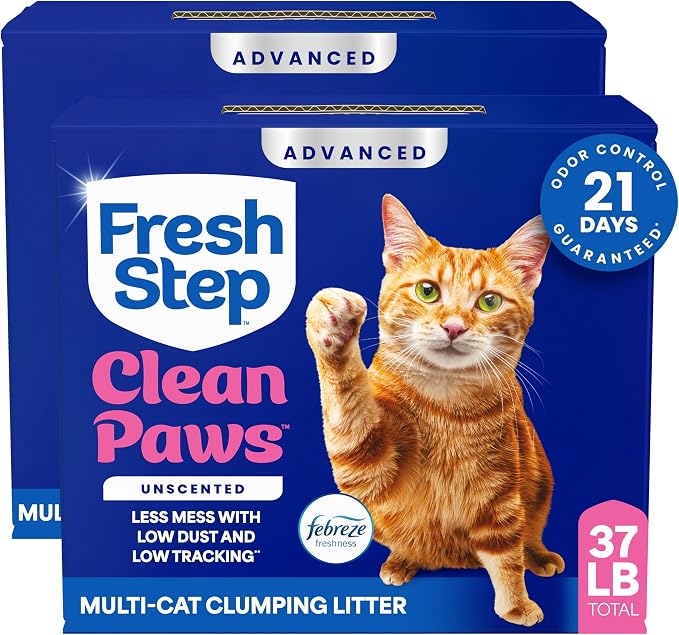 |
Best for multi-cat homesFresh Step Advanced Clean Paws Multi Cat Clumping Litter | 2 × 18.5 lb (37 lb total) | Check price |
 |
Best odour controlArm & Hammer Clump & Seal Platinum Clumping Litter | 37 lb bag | Check price |
 |
Best low-dust optionFresh Step Advanced Simply Unscented Multi Cat Litter | 2 × 18.5 lb (37 lb total) | Check price |
 |
Best natural optionökocat Original Natural Wood Clumping Cat Litter | 18.8 lb bag | Check price |
The picks in detail
Dr. Elsey's Ultra Unscented Clumping Clay Cat Litter
The 40 lb bag is the single most useful format on this list, because bulk is where litter money is actually saved and almost nothing else comes this large.
Verdict: Buy this one if you have the storage space. Bulk plus unscented is the combination that wins on cost and on cat acceptance.
Tidy Cats Free & Clean Unscented Clumping Litter
Close to the top pick on bag size, and unscented, which matters more than most people expect: a heavily fragranced litter is one of the most common reasons a cat starts avoiding the box. That makes it an easy bulk alternative to the top pick.
Verdict: A sensible bulk alternative if the Dr. Elsey's bag is out of stock, or if its current cost per pound works out higher on the day you check.
Fresh Step Advanced Clean Paws Multi Cat Clumping Litter
Sold as two 18.5 lb boxes rather than one sack, which is the practical difference here: same bulk weight, half the lifting, and you can keep the second box sealed while the first is in use.
Verdict: The pick for anyone filling two or more boxes, or anyone who cannot comfortably carry a 40 lb bag up a flight of stairs.
Arm & Hammer Clump & Seal Platinum Clumping Litter
Baking soda is the whole proposition, and it is the one thing this brand has genuinely built its reputation on. Reviews point at odour performance holding up between changes rather than fading after a few days.
Verdict: Worth considering if your box lives in a small flat, a bathroom, or anywhere you cannot walk away from.
Fresh Step Advanced Simply Unscented Multi Cat Litter
No added dyes or fragrance, and the listing is explicit about low dust and compatibility with most automatic litter boxes.
Verdict: The one to pick if anyone in the house, cat or human, reacts to dust, or if you run an automatic box.
ökocat Original Natural Wood Clumping Cat Litter
Wood fibre rather than clay, biodegradable, and much lighter to carry for the same box coverage. It is a smaller bag than the clay picks, and some cats need a gradual transition to the texture.
Verdict: Choose it for the material, not for the price. Mix it in over a week or two rather than switching overnight.
Where to buy it, ranked by what each place is good at
Amazon, on a repeat order
- Best for
- Large bags on a repeat order, delivered before you run out.
- Watch out for
- A delivery interval set faster than you actually use litter. Skip, do not stockpile.
Discount supermarkets
- Best for
- Own-brand clumping clay, often the lowest per-pound price anywhere.
- Watch out for
- Rotating stock and smaller bags. You cannot rely on it being there next month.
Pet superstores
- Best for
- Reliably having the large bags in stock, plus regular multi-buy promotions.
- Watch out for
- Mid-range pricing outside of a promotion. Worth waiting for the offer.
Specialist online pet shops
- Best for
- Wood, paper and silica litters that local shops rarely stock.
- Watch out for
- Delivery thresholds. Combine litter with food you need anyway.
Local independents and corner shops
- Best for
- Loyalty cards, and not running out at nine on a Sunday evening.
- Watch out for
- The worst per-pound price on the list. Fine as a stopgap, expensive as a habit.
Three rules that do most of the work
Price per pound, every time
Bags run from under 20 lb to 40 lb. The sticker price is meaningless until you divide it by the weight.
Buy the biggest bag you can store
Bulk is where the saving lives. The limit is dry storage and roughly two to three months of use, not your willingness to carry it.
Make the discount automatic
A repeat order or a loyalty scheme saves money every month without you having to remember to hunt for a deal.
The mistake that undoes all three is switching brands to chase a small saving. A sudden litter change can put some cats off the box, and cleaning up after that costs more in time and temper than the few pounds saved. If you do want to move to something cheaper, mix the new litter into the old over a week or two.
What to look for on any litter listing
Clumping or non-clumping
Clumping litter forms a solid ball around urine that you scoop out daily, so the rest of the bed stays usable and a full change is rare. Non-clumping litter absorbs but does not bind, so the whole box needs changing far more often. A non-clumping bag can look cheaper per pound and still cost more to run, because you throw more of it away.
Unscented or scented
Unscented is the safer default. Added fragrance is aimed at the human nose. We did not find a controlled study of perfumed litter, so unscented is a precaution rather than a proven fix. If odour is your worry, a baking-soda formula or simply scooping more often does the job without perfume.
Bag size and format
Read the weight in pounds on the listing, not the product title. A single large sack, two smaller boxes and a multi-pack can all be sold as the same product. Choose the biggest format you can store dry and carry comfortably, and use the same weight when you work out cost per pound.
Repeat order logic
A repeat order only saves money if the delivery interval matches how fast you get through a bag. Work out your monthly use in the calculator, then set the interval so a new bag arrives just before the last one runs out. Skip a delivery rather than stockpile.
What counts as a real deal
A real deal is a lower cost per pound for the same litter, in the same type, from a seller you trust. Everything else is noise. Run through this list before you click buy:
- Same product, same weight. Compare like with like. A cheaper listing is often a smaller pack.
- Your own cost per pound. Take the current price from the listing, divide by the bag weight in pounds, and compare it with what you paid last time.
- Unscented, low dust, clumping. A saving on a litter your cat will refuse is not a saving.
- Seller. Check who is selling and shipping the bag, and avoid listings from unknown resellers.
- Recent buyer feedback. Read the newest reviews for changes in formula or quality, not just the top-ranked ones.
- Storage. A big bag is only cheaper if you use it before it takes on moisture.
Prices and promotions on Amazon change, so none are quoted here. Always check the current price on Amazon yourself.
How often should you change cat litter?
This is really two questions, and the money is in the second one.
Scooping: every day, no exceptions
Daily, and twice a day in a multi-cat home. This is the one that is not negotiable and it is also free. In a controlled study of multi-cat households, cats preferred a clean litter box to a dirty one.[1] Evidence: limited
Full change: it depends on the litter, and this is where people waste money
- Clumping clay: you are removing the waste every day, so the bed itself does not need dumping weekly. Top up to keep about 7–10cm depth, and do a full dump and wash roughly monthly. Emptying a clumping box every week is throwing away clean litter.
- Non-clumping clay: urine stays in the bed, so a full change every week is the honest interval, and twice a week for two cats. This is the hidden reason non-clumping is rarely the cheaper option even when the bag is.
- Crystal or silica: follow the pack, usually a month for one cat, and stir it. It fails quietly: once saturated it stops absorbing and the smell arrives before you think it is due.
- Wood, paper or corn: varies a lot. Scoop solids daily, and change when the bottom layer stays damp.
The depth matters more than the schedule
Too shallow and the clumps stick to the bottom and break up, which forces you to dump the whole box far sooner. About 7 to 10cm gives the litter enough depth to form a clump that lifts clean. Most people under-fill and then blame the litter.
What actually needs washing
On the monthly full change, wash the box itself with unscented soap and hot water. Skip bleach and skip anything citrus or pine scented. We did not find a source that measures how cats react to cleaning scents, so rinse the box well.
Doing this properly does not cost more litter. It costs slightly less, because a well-kept clumping box wastes less than a badly kept one.
Frequently asked questions
What is the cheapest place to buy cat litter?
There is no single cheapest shop. Over a year, the biggest saving comes from the format rather than the retailer: a large bag bought online or at a discount supermarket, on a repeat order, beats small bags bought on the weekly shop almost every time. Work out the price per pound before comparing anything else.
How do I compare cat litter prices properly?
Divide the bag price by the bag weight in pounds. That single number is the only fair comparison across brands and pack sizes, because bags range from under 20 lb to 40 lb and the sticker price tells you nothing on its own. The calculator further up this page does the arithmetic for you.
Is cheap cat litter worse for my cat?
Not automatically. Cheaper litters can differ in fragrance and dust, and we did not find a controlled study that tests how these affect cat box use. Unscented, low-dust options are usually the safer buy, and several of them are also the cheapest per pound.
Do subscriptions actually save money on litter?
They generally lower the per-order price and remove the emergency corner-shop trip, which is where the worst per-pound prices live. The saving only holds if you get through the bag before the next delivery arrives, so set the interval to match your actual usage and skip a delivery when you are still stocked.
Is it cheaper to buy one big bag or several small ones?
One big bag, essentially always, provided you have somewhere dry to store it. The catch is moisture: litter left open in a humid room will start clumping in the bag, so buy the largest size you will genuinely use within about two to three months.
Why does my cat refuse a litter I just bought?
A cat may refuse a litter because of its texture or scent. Test a small bag before committing to bulk, and change brands gradually by mixing the new litter into the old.
Are wood or plant-based litters cheaper?
Per pound they are often competitive, and they are much lighter to carry, but bag sizes tend to be smaller so the total order cost can look higher. They are worth choosing for the material and the low dust rather than as a pure cost play.
How can I tell if a marketplace listing is a genuine deal?
Check the pack size in pounds against the price, not the product title, and read the most recent reviews rather than the top-rated ones. A listing that is far cheaper than everything around it is usually a smaller pack, an outdated price, or a reseller, and bag size is the whole basis of a litter price comparison.
The verdict
Cheapest is a format question, not a shop question. Work out your price per pound, buy the largest bag your cupboard and your cat will tolerate, and put the reorder on a schedule so the saving happens without you thinking about it. That alone moves most households a meaningful amount over a year, without downgrading the litter or unsettling the cat.
If you want one bag to start with, make it the Dr. Elsey's Ultra 40 lb bag: the largest common format here, and unscented.
Related reading
How this guide was made: product names and bag sizes were read directly off each live Amazon listing on 16 August 2026. This page shows no prices or review scores because Amazon prices change; check the current price on Amazon before you buy. No lab testing is claimed and none was done. Recommendations are based on ingredient labels and spec analysis. Two products from an earlier version of this list were removed because their listings were no longer live or no longer in stock.
Sick of scooping every single day?
Buying litter cheaply and buying an automatic box are opposite strategies: one trims the monthly bill, the other spends a lump sum to delete the chore. The comparison guide lays out what each model costs.
Best Automatic & Self-Cleaning Litter Boxes →Willemijn has kept animals for around 45 years. She did not have these particular items in her own home. What follows is her read on them, put together from research and from what she has seen at other owners' houses. We keep it separate from her hands-on notes on purpose, because the two are not the same thing.
Arm & Hammer Clump & Seal Platinum. Clumps perfectly, no dust, and it smells pleasant. Drawback: Slightly dearer.
Fresh Step Clean Paws Multi-Cat. Clumps well, but the scent is strong. Drawback: The added scent is too strong.
Fresh Step Advanced Simply Unscented. Clumps well, no smell. Drawback: The clumping is not perfect.
Tidy Cats Free & Clean Unscented. Clumps reasonably, but not as well as Arm & Hammer. Drawback: The clumping is not perfect.
Willemijn is a friend of the founder and is not paid for this.
References
- Ellis JJ, McGowan RTS, Martin F. Does previous use affect litter box appeal in multi-cat households? Behav Processes, 2017. PubMed