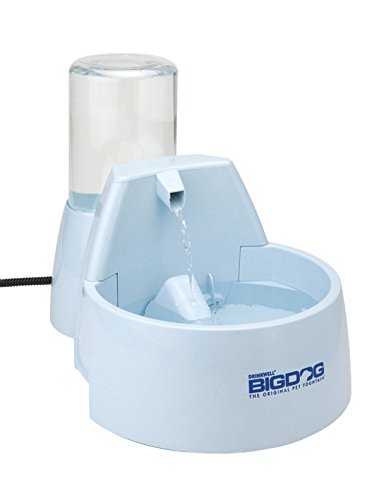
PetSafe Drinkwell Big Dog Water Fountain
Liv: 4/5 · Willemijn: 4/5
At 288 ounces this is the only fountain on the list that covers a large breed for a full day without a refill, and the five-inch deep bowl is the reason it does not end up as a puddle. If your dog is over about 50 lb, the arithmetic further down this page points here and nowhere else.
Start With the Arithmetic, Not the Reviews
Every other decision on this page follows from one number, so work it out before you read a single product description. The figure veterinary sources generally use is about one fluid ounce of water per pound of body weight per day. The Merck Veterinary Manual puts the daily water need of most mammals at rest at roughly 44 to 66 mL per kilogram, which lands in the same place.[1] Evidence: general guidance
That converts into a shopping decision immediately:
- A 10 lb terrier needs roughly 10 oz a day. Almost any fountain here holds three days' worth.
- A 35 lb spaniel needs roughly 35 oz. A 128 oz fountain is a comfortable three-day reservoir.
- A 70 lb Labrador needs roughly 70 oz. A 60 oz cat fountain is empty before dinner; a 128 oz fountain is a day and a half.
- Two large dogs need roughly 140 oz between them. Only the 288 oz and 270 oz models here hold more than a day.
Hot weather, exercise and a dry-food diet all push the real figure up, and a dog on wet food takes in a meaningful share of its water with the meal, so treat your number as a floor rather than a ceiling. That is the whole reason capacity sits at the top of this page while noise sits near the bottom: a quiet fountain that ran dry at two in the afternoon has not done its job.
When more drinking is a symptom, not a win
There is a point where a dog drinking more is not something to encourage with a bigger reservoir. Cornell's Riney Canine Health Center puts the line at 100 mL per kilogram of body weight per day, which is roughly 1.5 fluid ounces per pound, and calls a dog above it polydipsic.[2] Their advice is worth repeating exactly: do not restrict the water. Until a vet has assessed your dog, assume the dog needs it, because restricting access can cause dehydration or dangerous electrolyte problems. What they do recommend in the meantime is more water stations, not fewer — which is one of the few places where buying a second fountain is actually the veterinary advice.[2] If your dog's intake has climbed noticeably in the last few weeks, that is a phone call to your vet, not a purchase.
What Actually Differs Between Dog Fountains
Free-fall versus deep bowl. Free-fall designs, like the Drinkwell Platinum, push water up and let it cascade back down. Cats love them. Dogs that drink enthusiastically turn them into a splash zone. The deep-bowl designs, which is what the Big Dog model and the PETLIBRO capsule fountains use, keep the water level well below the rim so a big muzzle going in does not push water out.
Capacity versus footprint. A 288 oz reservoir is a large object on a kitchen floor. If you have the space, it is the lowest-maintenance option on this page by a distance. If you do not, two smaller fountains in different rooms is a genuinely reasonable alternative, and it has the side benefit of giving a nervous dog a second place to drink.
Plastic versus stainless steel. Stainless steel is non-porous, dishwasher-safe, and does not develop the fine scratches that plastic picks up over months of scrubbing. VCA notes a possible association between scratched plastic food and water dishes and chin acne, and suggests non-porous dishes such as glass or stainless steel may help in some cases.[3] Evidence: limited, and the published work is about cats The hygiene argument for a non-porous surface holds for dogs too, but nobody has shown a dog health benefit, so treat it as a cleaning preference rather than a medical one.
Filters. Every fountain here uses a replaceable carbon filter, typically rated two to four weeks. Look up the filter multipack price before you buy. On the cheaper models a year of filters can cost more than the fountain, which quietly reverses the price ranking you thought you were choosing on.
The Five Picks
PetSafe Drinkwell Big Dog Water Fountain
This is the model the rest of the category is measured against, and the reason is plain spec: a 288 oz reservoir, which is more than four days for a 70 lb dog and a full day for two of them. The five-inch deep bowl is the design decision that matters most in practice, because it is what stops a big dog's muzzle from pushing water over the rim. The trade-off is physical size and the fact that the reservoir is plastic, so it wants a proper scrub rather than a rinse. If you own a large breed or more than one dog, this is the pick on this page, and it is not close.
Pros
- 288 oz is the largest reservoir here by a wide margin
- Five-inch deep bowl keeps water in the bowl, not on the floor
- Designed for multiple pets sharing one station
Cons
- Takes up real floor space
- Plastic reservoir needs a thorough scrub, not a rinse
- Overkill for a single small dog
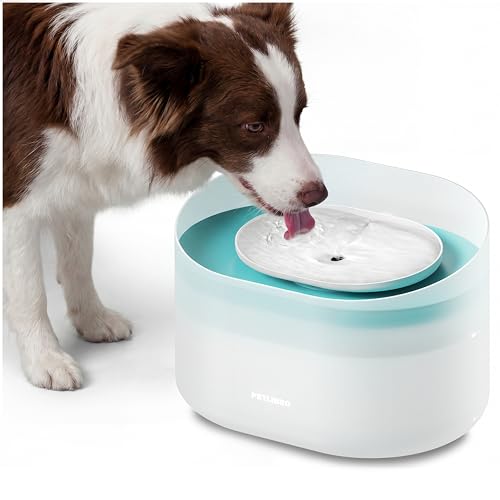
PETLIBRO 2.1 Gallon Dog Water Fountain
A 2.1 gallon capsule fountain, which is about 270 oz, built around an anti-splash spout and a five-layer filter stack. It is the direct alternative to the Big Dog model, and the choice between them comes down to shape: the capsule is tall and narrow where the PetSafe is wide and low, so it fits a corner that the Big Dog will not. PETLIBRO rates the pump as ultra-quiet, which is a nice-to-have with dogs rather than the deciding factor it is with cats. The five-layer filtration is more thorough on paper than the single carbon cartridge most rivals use, though it also means a more expensive consumable.
Pros
- 270 oz in a tall, narrow footprint that fits a corner
- Anti-splash spout aimed squarely at messy drinkers
- Five-layer filtration rather than a single carbon pad
Cons
- Filter stack is a pricier consumable than a plain carbon cartridge
- Tall design is easier for a boisterous dog to knock
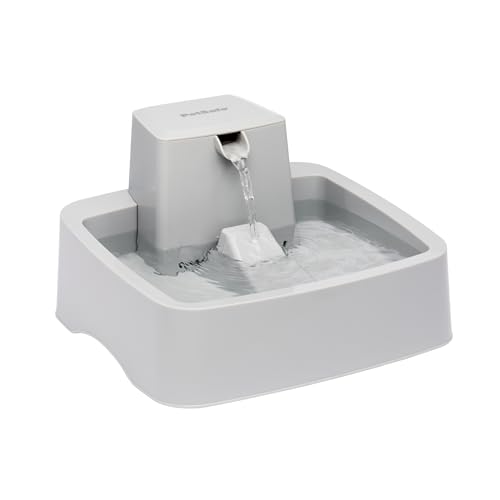
PetSafe Drinkwell 1 Gallon Pet Fountain
One gallon, 128 oz, and PetSafe positions it for cats and small to medium dogs rather than large breeds, which is an unusually honest piece of marketing. Run the arithmetic: 128 oz is nearly four days for a 35 lb spaniel and about a day and a half for a 70 lb Labrador. It gives a dog both options, a falling stream and a standing bowl, which is useful if you do not yet know which your dog prefers. This is the sensible default for a single dog under roughly 45 lb, and the one to pick if a dog and a cat are sharing.
Pros
- 128 oz covers a small or medium dog for several days
- Stream and bowl together, so the dog picks
- Works as a shared cat-and-dog station
Cons
- Not enough reservoir for a large breed or two dogs
- Carbon filters are an ongoing cost
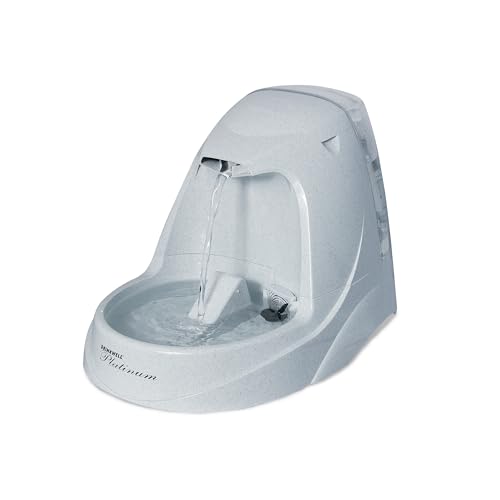
PetSafe Drinkwell Platinum Pet Fountain
The Platinum is the free-fall classic: water is pushed up and falls back down in a visible stream, which is the style that pulls in a dog who ignores a still bowl. It holds 168 oz, and the adjustable flow control is the feature to actually use here, because turning the stream down is how you stop a free-fall fountain splashing. It is the pick for a dog that has to be persuaded to drink at all, rather than one that simply needs volume. We also recommend it on our best dog water bowls roundup, where it sits as the fountain option among the static bowls.
Pros
- Visible falling stream tempts reluctant drinkers
- 168 oz, comfortably more than a cat fountain
- Adjustable flow lets you dial the splash down
Cons
- Free-fall splashes more than a deep bowl, even turned down
- More parts to take apart at cleaning time
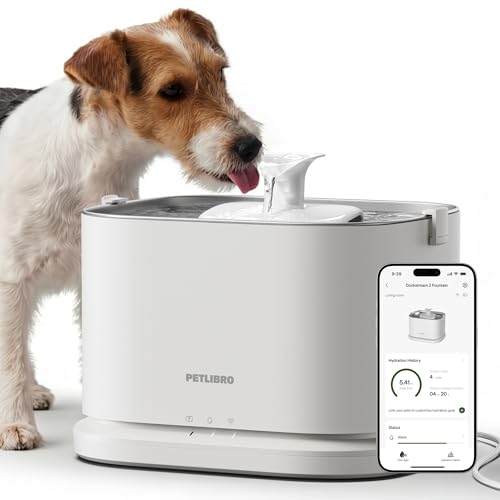
PETLIBRO Smart Stainless Steel Tray Dog Fountain
A 3 litre fountain with a stainless steel tray and app monitoring, which sounds like a gimmick right up to the moment a vet asks you to log how much your dog is actually drinking. Eyeballing a bowl is not data; this gives you a daily figure. Capacity is the limit, at roughly 101 oz it is a small-to-medium dog's fountain, so if you own a Labrador with a kidney diagnosis this is the wrong size for the right idea. The stainless tray is the other real advantage, since it is the surface the dog's mouth touches. For owners already running connected gear, it sits alongside the devices in our smart collar and health tracker guide.
Pros
- App gives a real daily intake figure instead of a guess
- Stainless steel tray where the dog actually drinks
- Doubles as a cat fountain in a mixed household
Cons
- About 101 oz, too small for a large breed
- App setup is another account and another password
- Most expensive way to hold three litres of water
Which One, in One Line Each
- Large breed, or two dogs: PetSafe Drinkwell Big Dog, 288 oz. Nothing else here holds a day's water.
- Large breed, but no floor space: PETLIBRO 2.1 Gallon, same capacity class in a tall footprint.
- One dog under about 45 lb: PetSafe Drinkwell 1 Gallon.
- A dog that will not drink from a still bowl: Drinkwell Platinum, flow turned down.
- Your vet asked you to log intake: PETLIBRO Smart, if your dog is small or medium.
Keeping It Clean Without It Becoming a Chore
A fountain that is not cleaned is worse than a bowl that is, because the pump keeps recirculating whatever is in there. The routine that actually survives contact with a busy week is this: rinse the bowl and wipe the tray daily, which takes under a minute; take the pump apart and clean the impeller weekly, because that is where the slime builds and it is also what makes a pump get noisy; replace the carbon filter every two to four weeks, sooner in a multi-dog home.
Dogs bring food into the water far more than cats do, so if yours drinks straight after eating, expect the pre-filter to clog faster than the box claims. That is the single biggest reason dog owners decide a fountain was a mistake, and it is solved by moving the fountain away from the food bowl rather than by buying a different fountain.
What We Are Not Claiming
The research showing that pets drink more from moving water is small, and most of it is about cats rather than dogs. We have not found a decent trial showing a dog drinks more from a fountain than from a clean, refilled bowl. So the honest case for a dog fountain is narrower than most pages selling one admit: it holds more water than a bowl, it filters what is in it, and it keeps the supply moving so it stays fresher between refills. For a large dog in a house where nobody is home all day, that is a real convenience. It is not a health intervention, and if your dog is drinking noticeably more or less than usual, the answer is your vet rather than this page.
Frequently Asked Questions
How much water does a dog need a day?
Roughly one fluid ounce per pound of body weight per day is the figure most veterinary sources use, and the Merck Veterinary Manual's 44 to 66 mL per kilogram lands in the same range.[1] A 70 lb Labrador is therefore around 70 oz a day. That number is what should decide which fountain on this page you buy.
Is a fountain better than a bowl for a dog?
For most dogs it is a convenience rather than a health intervention. Where it genuinely earns its place is capacity and filtration: a 288 oz reservoir means a big dog is never standing over an empty bowl at four in the afternoon.
Will a dog fountain splash all over the floor?
Deep-bowl designs splash far less than free-fall ones. The Big Dog model uses a five-inch deep bowl specifically to keep water in it. A free-fall fountain next to an enthusiastic drinker will leave a puddle, so put a mat under it either way.
How often do the filters need replacing?
Manufacturers generally say two to four weeks, sooner in a multi-dog home. Check the filter multipack price before you buy, because on a cheap fountain a year of filters can cost more than the fountain did.
Can a dog and a cat share one fountain?
Yes, and the multi-pet models here are designed for it. Watch bowl height rather than capacity: a cat will not approach a fountain a big dog is standing over. Our cat water fountain guide covers the feline side of that decision.
My dog suddenly started drinking much more. Is a fountain the answer?
No, that is a reason to call your vet. Cornell's Riney Canine Health Center calls a dog polydipsic above 100 mL per kilogram per day, about 1.5 fl oz per pound. Do not restrict the water; book the vet.[2]
Stainless steel or plastic?
Stainless steel is non-porous and dishwasher-safe and does not scratch the way plastic does. VCA notes a possible link between scratched plastic dishes and chin acne in cats.[3] The dog evidence is thinner, so treat it as a cleaning preference rather than a medical one.
The Verdict
If your dog is over about 50 lb, or you have two dogs, buy the PetSafe Drinkwell Big Dog and stop reading. It is the only fountain here whose reservoir matches what a large dog drinks in a day, and the deep bowl is what keeps the water off your floor. Under 45 lb, the Drinkwell 1 Gallon does the same job for less money and less floor space. Everything else on this page is a specific answer to a specific problem: a dog that will not drink, or a vet who wants numbers.